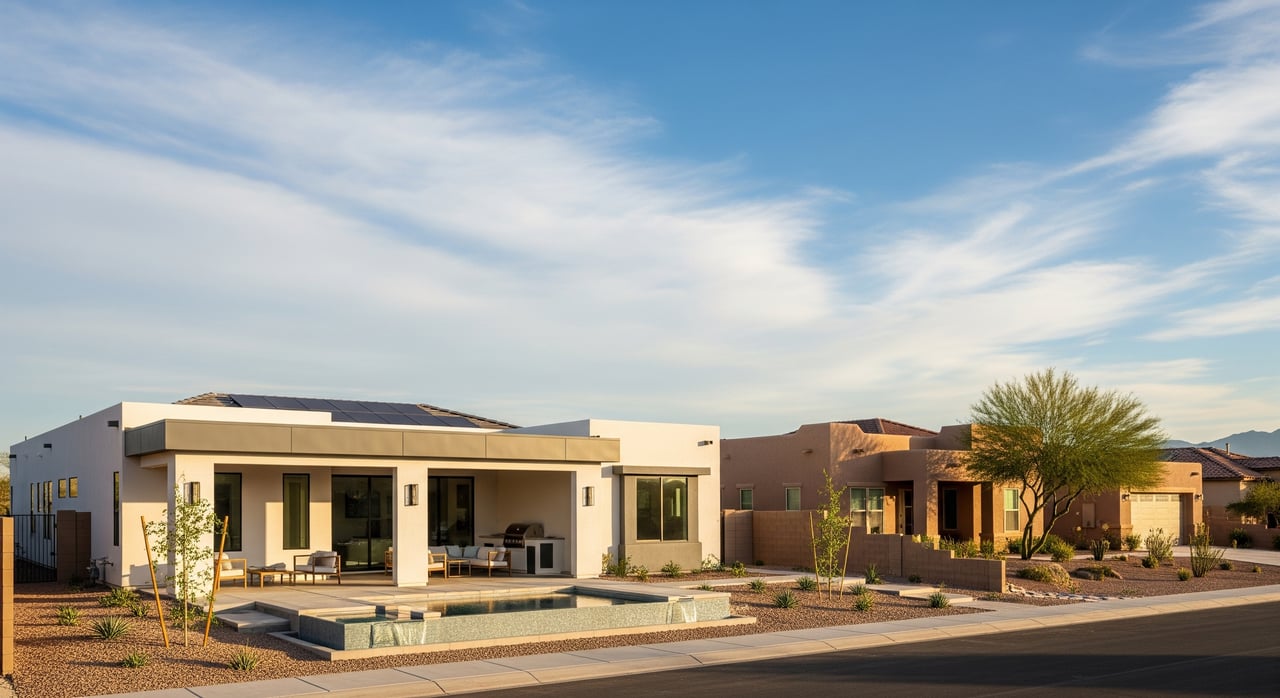
Staring at model-home perfection on one side and a charming, established street on the other? You are not alone. Choosing between a new build and a resale in Goodyear comes down to your timeline, budget, and how much maintenance you want in the near term. In this guide, you will get a clear comparison, smart cost checkpoints, local due diligence tips, and a simple decision framework so you can move forward with confidence. Let’s dive in.
New vs. resale at a glance
| Factor | New Construction | Resale |
|---|---|---|
| Price | Often a premium; upgrades and lot premiums add cost | Often more negotiable; value plays exist in established pockets |
| Timeline to close | Completed spec homes can close quickly; build-to-order can take months | Typically 30–45 days after contract, faster with cash |
| Negotiation power | Less on base price; incentives like rate buydowns or closing credits vary | More flexible on price, repairs, and concessions |
| Maintenance in first years | Low; new roof, HVAC, plumbing, appliances | Higher risk of near-term replacements or repairs |
| Upgrades and customization | Finish selections and options early in build | Limited to post-close renovations |
| Warranties | Builder-limited warranties for workmanship, systems, and structure | Usually none, unless recently built or covered by manufacturer warranties |
| Landscaping and curb appeal | Minimal at delivery; you build it out | Mature trees and yards already in place |
| HOA and CCRs | Common with new communities; design rules may be strict | Varies by neighborhood; rules can be less restrictive |
| Energy efficiency | Modern codes and systems, often more efficient | May lack current insulation or window standards |
| Risk and unknowns | Construction delays, interest rate movement | Hidden issues from age and prior work uncovered by inspection |
Costs and financing you might overlook
Buying a home is more than the sticker price. In Goodyear, your true cost depends on upgrades, landscaping, HOA dues, and how you structure financing. Take a moment to budget for items buyers frequently miss.
- New construction extras: lot premiums, design center upgrades, backyard landscaping, fencing or gates, window coverings, and potential solar packages.
- Resale catch-up costs: roof, HVAC, or water heater replacements, pool equipment, flooring updates, or kitchen and bath refreshes.
- Closing costs and concessions: builders sometimes offer credits or temporary rate buydowns; resale sellers may offer concessions depending on market conditions.
New construction financing basics
Financing depends on whether you choose a completed spec home or a build-to-order home. Spec homes usually qualify for standard mortgages, similar to resales. Build-to-order homes may involve construction or interim loans that convert to permanent financing, often through a builder’s preferred lender. Many builders offer incentives like temporary rate buydowns or lender credits. These programs change often, so verify current options with your lender and the builder.
FHA and VA loans can work for new construction if the lender and builder meet program requirements. Ask early about appraisal timing, completion milestones, and how rate locks or extensions are handled if construction runs long.
Resale financing basics
Conventional, FHA, and VA loans are common for resale purchases, and many close within 30–45 days after loan approval. You can sometimes negotiate seller credits toward closing costs or rate buydowns. If you plan renovations, discuss rehab-friendly loan options with your lender and line up quotes to avoid surprises.
Taxes and HOA realities in Goodyear
Property is assessed by Maricopa County. New construction may be reassessed upon sale, so confirm current assessed values for comparable homes with the title company or county records. Many Goodyear neighborhoods have HOAs. Get the dues amount, what it covers, and whether increases or special assessments are planned. Builders typically cover municipal impact fees, but confirm any connection fees for water or sewer with the title company. Always verify tax and fee details before you sign.
Due diligence checklists
Thorough due diligence protects your budget and your timeline. Use these Goodyear-focused checklists to move through the process confidently.
If you buy new construction
- Questions for the builder:
- What is included in the base price vs. upgrades?
- What incentives are available now and what are the rules to qualify?
- What are the warranty terms, who administers them, and how do you file a claim?
- What is the estimated completion date and what are the remedies if the build is delayed?
- Who is the electricity and water provider? Are solar-ready roofs or packages available?
- Inspections to schedule:
- Pre-pour or foundation inspection, if timing allows.
- Pre-drywall inspection to check framing, plumbing, and electrical.
- Final inspection before closing, plus a detailed walk-through.
- Walk-through and punch list:
- Document everything with photos and notes.
- Get timelines for completion and commitments in writing before closing.
- Orientation and energy:
- Consider lot orientation to manage heat and cooling costs.
- Verify performance estimates for any solar or energy features and whether systems are owned or leased.
If you buy a resale
- Documents to request:
- Seller disclosures and any past inspection reports.
- Twelve months of utility bills, if available.
- HOA documents, meeting minutes, budget, and any reserve study.
- Permits for additions or major work.
- Inspections to order:
- General home inspection, plus pest/termite given Arizona conditions.
- Roof and HVAC checks, sewer scope for older homes, and pool inspection if applicable.
- Negotiation and repairs:
- Use inspection results to negotiate repairs or credits.
- Confirm agreed repairs in contract addenda and re-inspect before close.
Local factors that shape your decision
Goodyear sits within the West Valley and continues to grow with a mix of master-planned communities and established neighborhoods. Your commute and daily routine matter. Proximity to I-10 and Loop 303 can influence your choice depending on where you work in the Phoenix area. If you are targeting outdoor recreation, consider access to parks, golf courses, and the Estrella Mountain area.
HOAs are common, especially in newer developments. Architectural rules may limit exterior changes, paint colors, and fencing, and some communities have rental restrictions. Ask for rules and budgets early so you understand the community’s standards and financial health.
Energy and water are front-of-mind in the desert. Newer homes often include modern insulation, efficient HVAC, and updated windows. Lot orientation matters because west-facing exposure can increase cooling load. Water-wise landscaping is encouraged, and some communities may have landscape guidelines. Utility providers and net metering policies vary by location, so confirm specifics with the relevant provider.
Which path fits your profile?
- First-time buyers on a tight budget
- Resale can offer more room to negotiate and already-completed landscaping. Focus on roof and HVAC condition, and build in a reserve for updates.
- Buyers who want low maintenance now
- New construction reduces near-term surprises and includes warranties on workmanship, systems, and structure. Verify exact terms with the builder.
- Move-up buyers who want tailored space
- New builds offer modern layouts and options, while a recent remodel in a resale home can deliver a move-in-ready feel with established neighborhood character.
- Investors and landlords
- Resale homes in established rental areas may lease faster and can be easier to underwrite. New homes can command premium rents but may have HOA rental limits. Confirm CCRs before you write an offer.
- Downsizers and retirees
- Single-story new builds with efficient systems and low-maintenance yards are appealing. Alternatively, a resale closer to services can reduce daily driving.
Next steps to decide with confidence
Clarify your timeline. If you need keys in 30–45 days, focus on resale or completed spec homes. If you can wait, consider build-to-order.
Map your total budget. Add upgrades, lot premiums, landscaping, window coverings, and fencing to the base price for new construction. For resales, set aside funds for repairs or updates identified during inspection.
Talk to your lender. Ask about new construction products, rate locks, temporary buydowns, and how builder incentives affect your effective price.
Gather documents early. For resales, request disclosures and HOA documents up front. For new builds, get the warranty booklet, CCRs, and utility info in writing.
Schedule the right inspections. New or resale, independent inspectors can catch issues before closing and save you time and money.
Tour strategically. Visit model homes and resales at different times of day to gauge traffic, noise, and sun exposure. If you are relocating, arrange live virtual tours so you can compare options side by side.
Ready to weigh your options with a local expert who knows both new builds and resales across the West Valley? Schedule a quick strategy call with Gabriel Santellano for tailored guidance, neighborhood insights, and remote-friendly tours. When you are ready, reach out to Gabriel Santellano to get started.
FAQs
Are new builds always more energy efficient in Goodyear?
- Generally yes because of modern codes and equipment, but ask the builder for specific energy features and any available home energy scores, and verify with the utility provider.
Can I negotiate with a builder on price or terms?
- There is usually less flexibility on base price, but builders often adjust with incentives like temporary rate buydowns or closing credits, which vary by community and season.
Do I need inspections on new construction in Arizona?
- Yes; schedule independent inspections at pre-pour, pre-drywall, and final stages to strengthen your punch list and ensure quality before closing.
How long does a build-to-order home take in Goodyear?
- Many builds run 3–12 months depending on the builder’s queue, materials, and options; confirm the estimated completion date and remedies for delays in the contract.
How do HOA rules affect renovations or rentals?
- Covenants can limit exterior changes, fence styles, and paint colors, and some communities place rental restrictions; review CCRs, budgets, and meeting minutes before you commit.
Which loans work for new construction vs. resale?
- Resales typically use conventional, FHA, or VA loans; new construction can use similar financing for spec homes, while build-to-order may require construction or interim loans that convert to permanent financing.